
Fuel Your Day the Right Way — A Man's Complete Guide to Daily Vitamins
Most men go through their days running on empty — not because they lack willpower, but because their bodies are quietly missing key nutrients. Our editorial team at Vitalmalehealth breaks down exactly which vitamins and supplements matter most, when to take them, and why the science behind them is worth understanding.
The information on this site is for educational purposes only and does not constitute medical advice. Always consult a qualified healthcare professional before making health decisions.
Why Men's Nutrition Deserves More Attention
Understanding the scale of nutritional gaps among men is the first step toward making informed daily choices about your wellbeing.
Widespread Vitamin D Shortfall
Researchers consistently find that a significant portion of adult men — particularly those working indoors or living in northern latitudes like Poland — have insufficient Vitamin D levels. This single nutrient plays a role in mood, energy, bone density, and immune function.
Growing Awareness of Supplements
Interest in men's nutritional supplementation has grown substantially across Europe. More men are actively researching what they put in their bodies rather than relying solely on diet — reflecting a shift toward informed, proactive self-education about nutrition.
Diet Alone Often Falls Short
Even men who follow a reasonably balanced diet frequently miss optimal intake levels for key micronutrients like magnesium, zinc, and B12. Modern soil depletion, food processing, and fast-paced lifestyles all contribute to nutritional gaps that can accumulate over time.
What Your Body Actually Needs — Breaking Down Essential Vitamins for Men
Not all vitamins are created equal — and not all supplements are worth your attention. The men's health landscape is filled with marketing noise, so our editorial team focuses exclusively on nutrients that have a well-documented role in male physiology, backed by nutritional research.
Men's nutritional needs differ meaningfully from women's. Higher muscle mass, different hormonal profiles, and distinct metabolic demands mean that certain vitamins and minerals deserve particular focus. Zinc, for instance, is heavily utilized in cellular processes unique to male biology, while magnesium supports over 300 enzymatic reactions in the body — many of which are taxed by physical activity and stress.
Our content explores both fat-soluble vitamins like D3 and K2, which require dietary fat for absorption, and water-soluble ones like B12 and Vitamin C, which need to be replenished regularly. Understanding these basic distinctions helps you make smarter decisions about timing and food pairings.
Read: Daily Vitamins Guide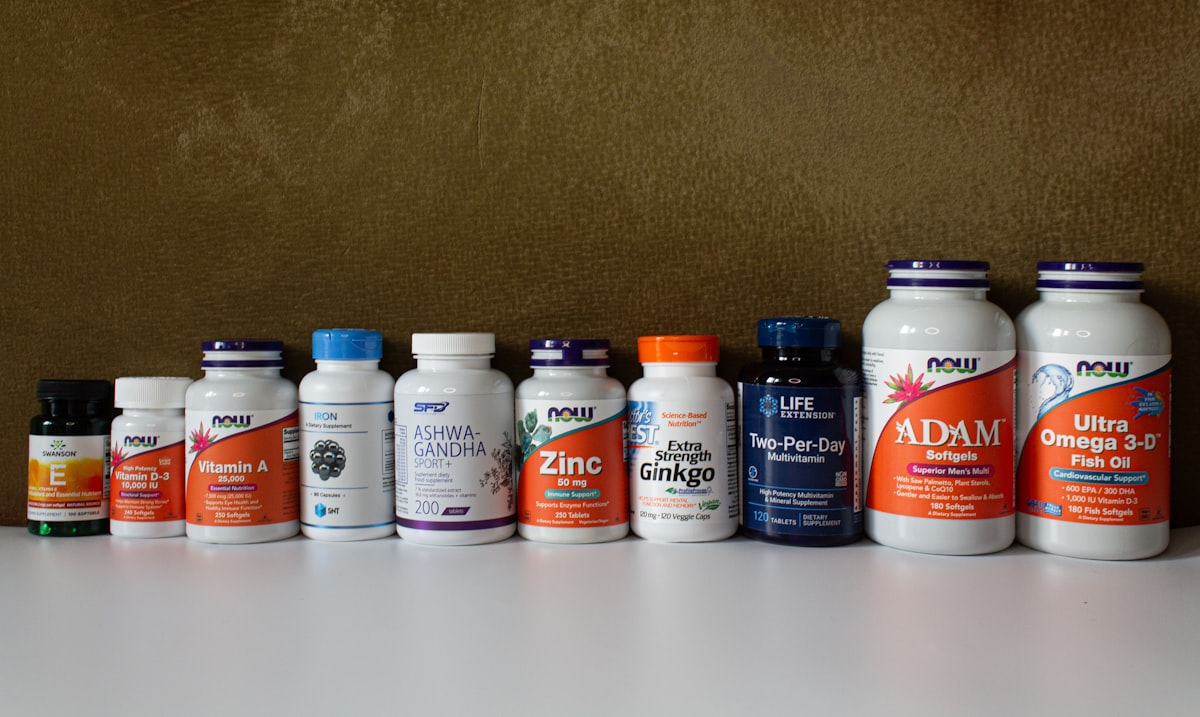
A Simple 3-Step Morning Stack
Consistency beats perfection. Here's how most men can structure a straightforward morning supplement routine without complexity or confusion.
Wake Up & Hydrate First
Before reaching for any supplement, drink a full glass of water. Overnight, your body loses fluids, and many vitamins — especially water-soluble ones like B12 and Vitamin C — absorb more effectively in a well-hydrated system. This simple habit sets a strong foundation for everything that follows.
Take Your Core Stack with Breakfast
Fat-soluble vitamins like D3 and Omega-3s are best absorbed alongside a meal containing healthy fats — eggs, avocado, or nuts pair well. Taking magnesium in the morning with food also helps avoid the digestive sensitivity some men experience on an empty stomach. Zinc should be taken at least an hour away from calcium-rich foods to avoid absorption competition.
Move, Work, and Track How You Feel
Supplements work best when paired with consistent habits. After your morning routine, engage in some form of physical activity — even a short walk activates cellular processes that put your nutritional intake to work. Keep a simple weekly log of your energy, focus, and sleep quality to identify which elements of your stack are making a noticeable difference over time.
Want to Stay Informed on Men's Nutrition?
Our editorial team publishes in-depth guides, ingredient breakdowns, and practical tips for men navigating the world of daily nutrition. No fluff — just well-researched content you can act on.
6 Supplements Every Man Should Know About
These aren't trendy products — they're well-studied nutrients with clearly understood roles in male health. Our editorial team has covered each one in dedicated deep-dive articles.
Vitamin D3
Often called the "sunshine vitamin," D3 is synthesized in the skin through sun exposure — something most men living in Poland get far too little of between October and April. It plays a documented role in mood regulation, bone density support, and immune function. Pairing it with K2 (MK-7) helps direct calcium where the body needs it most.
Read the D3 guideMagnesium
Magnesium is involved in over 300 enzymatic processes in the human body — including muscle contraction, nerve signaling, and energy production. Men who train regularly deplete magnesium faster through sweat. Forms like magnesium glycinate or malate are noted for their better bioavailability compared to cheaper oxide forms commonly found in generic products.
Read the Magnesium guideOmega-3 Fatty Acids
EPA and DHA — the active forms of Omega-3 found in fish oil — are essential for cardiovascular and cognitive function. Most Western diets are heavily skewed toward Omega-6, making supplemental Omega-3 particularly relevant for men who don't eat fatty fish multiple times per week. Look for products that disclose EPA/DHA content clearly on the label.
Read the Omega-3 guideZinc
Zinc is one of the most important trace minerals for male physiology, playing a key role in cellular replication, immune response, and the maintenance of normal enzyme activity. It's notably found in high concentrations in the prostate gland. Men who follow plant-heavy diets or who sweat frequently may benefit from monitoring their zinc intake, as it's not stored by the body.
Read the Zinc guideVitamin B12
B12 is critical for red blood cell formation, DNA synthesis, and the proper functioning of the nervous system. It's found almost exclusively in animal products, meaning vegetarian and vegan men are at particularly elevated risk of deficiency. Even men who consume meat may absorb B12 poorly if their gut health is compromised, making it one of the more important vitamins to keep an eye on.
Read the B12 guideCreatine
Creatine monohydrate is one of the most extensively researched nutritional supplements in existence, with a strong body of evidence supporting its role in supporting physical performance and muscle energy availability. It works by replenishing ATP — the body's primary energy molecule — during high-intensity effort. Emerging research also suggests potential cognitive benefits, making it relevant beyond just athletic contexts.
Read the Creatine guideWhat Happens When Men Ignore Nutritional Gaps?
Nutritional deficiencies rarely announce themselves dramatically. Instead, they tend to surface gradually — as persistent fatigue, declining focus, sluggish recovery after exercise, or disrupted sleep patterns. Many men attribute these signs to age or stress without ever considering that their diet simply isn't providing what their body requires.
The consequences of long-term micronutrient insufficiency can be cumulative and wide-ranging. Low Vitamin D is associated with reduced bone density over time. Chronic magnesium shortfall can compound the physical effects of daily stress. Inadequate Omega-3 intake is linked to cardiovascular and cognitive concerns in nutritional epidemiology literature. These are well-documented patterns — not speculation.
This is why nutritional awareness — not just supplement use, but understanding your intake from all sources — is one of the most practical investments a man can make in his long-term quality of life. Our content at Vitalmalehealth exists precisely to make that education accessible and straightforward.
Explore Educational ArticlesFrequently Asked Questions
Our editorial team addresses the questions men most frequently ask about daily vitamin use, timing, and nutritional science.
Timing depends on the type of vitamin. Fat-soluble vitamins — A, D, E, and K — are best taken with a meal that contains some dietary fat, since fat aids their absorption. Water-soluble vitamins like B12 and Vitamin C can generally be taken at any time, though many people find them easier on the stomach with food. Magnesium is often best taken in the evening as it supports muscle relaxation and sleep quality. Creatine can be taken any time — consistency matters more than timing for this particular compound.
In theory, a diverse and nutrient-dense diet can cover most micronutrient needs. In practice, very few people — including those who eat well — consistently hit optimal intake levels for every key nutrient. Factors like food processing, cooking methods, soil depletion, and individual absorption variability all create gaps. In Poland specifically, Vitamin D is almost impossible to obtain adequately from sun exposure for roughly half the year, making supplementation particularly logical for most adults regardless of dietary quality.
Yes — and this is an important nuance. Fat-soluble vitamins (A, D, E, K) accumulate in the body and can reach excessive levels over time if taken in very high doses without monitoring. Water-soluble vitamins are generally excreted by the body when consumed in excess, though extremely high doses of certain B vitamins and Vitamin C can still cause discomfort. The key principle is to use supplements to fill genuine gaps rather than to dramatically exceed recommended daily values without a specific evidence-based reason.
There are meaningful differences. Men generally have higher requirements for zinc and certain B vitamins due to muscle mass and metabolic demands. Women typically have higher iron requirements due to menstruation — meaning standard men's formulas intentionally exclude or minimize iron, since excess iron is linked to oxidative stress in men. Men also benefit from specific attention to nutrients that support prostate and cardiovascular function, such as lycopene, selenium, and Omega-3s. Gender-differentiated supplements are not marketing gimmicks — they reflect genuine physiological differences.